
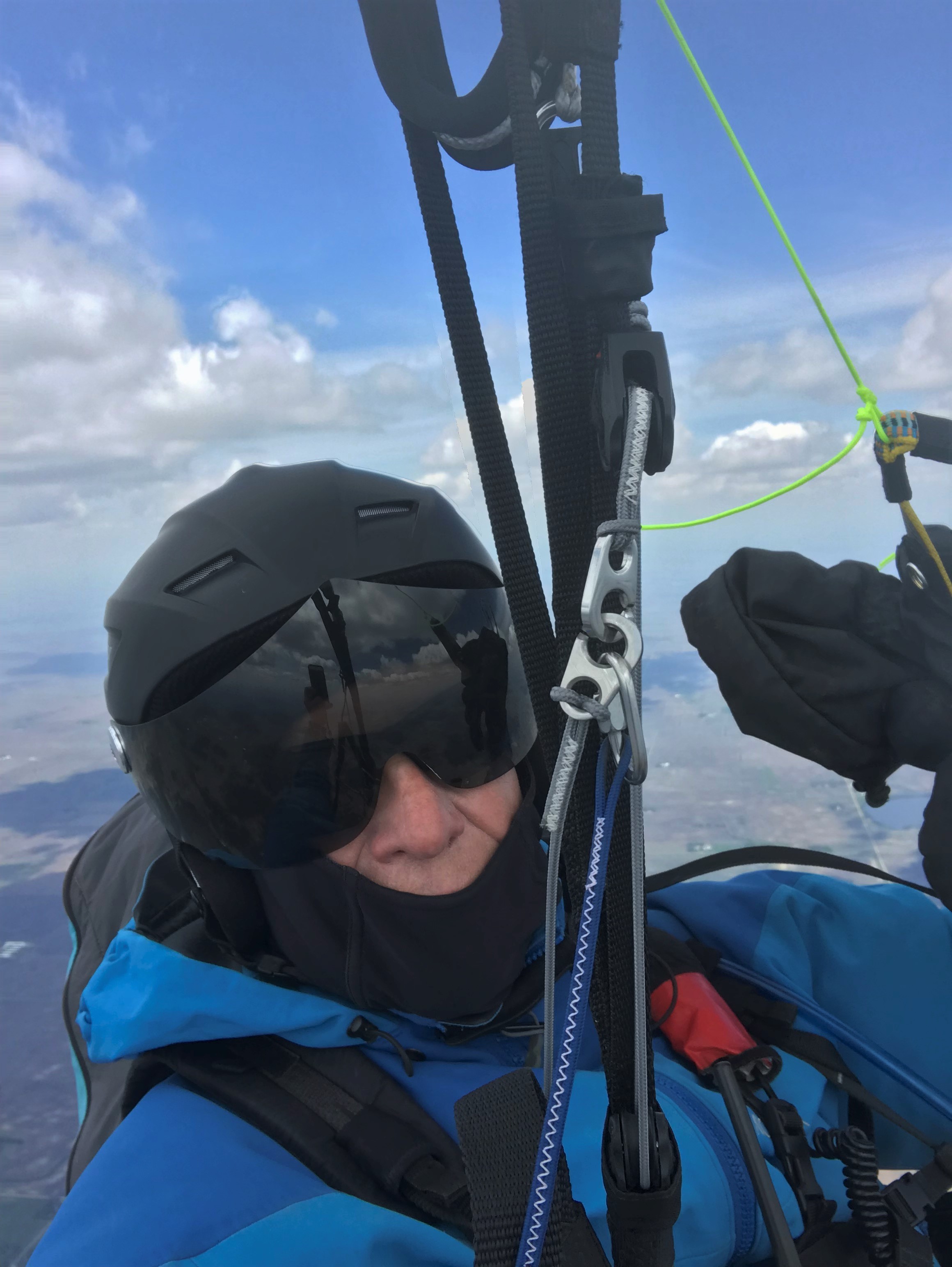
Featured Photo: The author keeping it simple: no motor, no gas flying his paraglider a mile above the fields of Western Minnesota.
The fifty plus year old man standing in front of us demands attention. We listen spellbound. With square jaw, close cropped grey hair, and bright eyes he is preaching the benefits of nutritional supplements to a group of personal trainers, including me. His black polo shirt did little to conceal the bulging musculature of a competitive body builder. I drink the Kool Aid— to be healthy and recover from exercise you need to use nutritional supplements. It was 2015 and my first year as a full time personal trainer working for Lifetime Fitness.
The supplement industry is a $149 billion dollar a year industry. It is estimated that 74% of U.S. adults use dietary supplements and an estimated 55% qualify as regular users. The industry spends its marketing dollars on professional athletes, teams, leagues and sporting events. Supplement makers bring money to the table and spread it around to influencers like coaches and personal trainers.
Supplements are unregulated by the U.S Food and Drug Administration. Attempts to regulate are fought by the nutrition and supplement industry which spends, according to Open Secrets, over $3 million in lobbying per year. Supplements have caused death and illness. Supplements sometimes contain banned substances and have been responsible for professional athletes and Olympians failing drug tests.
Like many other athletes I take supplements for recovery and to stay healthy. I am driven mainly by FOMO: Fear of Missing Out. To myself I say, “Your diet isn’t that great. You need vitamin supplements. You are not getting enough protein. You need to drink protein shakes.” However, as I have done research into the subject over the years I realize the idea that exercise, even intense exercise creates extraordinary nutritional needs does not make sense. Our bodies have evolved over millions of years to handle extreme stress and exercise. Recently, I read Dan Buettner’s book, The Blue Zones. Many of the Blue Zones centenarians live rural lifestyles. Their diet consists of a limited variety of natural foods in moderation. They live an active life without artificial supplements.
For years I justified my supplement use based on “studies” showing the positive impact of taking nutritional supplements. Digging deeper, I find that the “studies” are funded by drug and supplement companies, have a small sample size that is not representative of the general population, and are of short duration. If one has a bias towards a certain outcome, then design the test to show the desired outcome. As Christie Aschwanden writes in her book, Good to Go: “Supplement studies are not scientific quests for truth, but marketing exercises designed to sell products.”
I have heard stories of professional athletes spending $500 to $1000 per month on nutritional supplements. If it works and you can afford it, great; just be aware of the risks and the placebo effect. The placebo effect? That is a beneficial effect produced by a placebo drug or treatment, which cannot be attributed to the properties of the placebo itself, and must therefore be due to the patient’s belief in that treatment. If you think supplements benefit you then by all means, keep taking them.
I take supplements for health and recovery. I drink protein shakes. I have found it does not matter if I drink the shake before, immediately after or long after a workout. At my age, I have a hard time getting enough protein in my diet. It’s a matter of convenience. I take Calcium Magnesium Citrate because I am prone to muscle cramping and migraine headaches. Does it work? I think so, but I still occasionally get cramps and migraines. I take Zinc Picolinate to support my immune system—pure FOMO. I take Vitamin D3 because I live in a cloudy climate and my doctor tells me to. For all of these supplements, I take less than the labels recommend and I spend less than $50 per month.
It seems to work. I rarely get sick. Other than the aches and pains of old and new injuries, I have no chronic medical conditions. I race bikes, climb and ski mountains, and fly my paraglider. Eat well, get a good night sleep, drink water and leave time to recover after your workout. Keep it simple. There is no magic bullet.

Leave a Reply